
A literature review rarely fails because you cannot find enough papers. It usually gets difficult after the search begins: too many PDFs, too many similar abstracts, conflicting findings, and no clear path from scattered notes to a defensible research gap.
That is why a Literature Review AI tool should not be judged only by how well it summarizes a paper. The more useful question is: which part of the research workflow does it improve? Some tools are better for discovering papers, some are built for screening and extraction, and others help you compare evidence, check citation context, or synthesize a deeper view of the field.
This guide focuses on that workflow. Before comparing the 8 best Literature Review AI tools in 2026, let’s quickly clarify what researchers actually need help with.
What a Literature Review AI Tool Should Help You Do
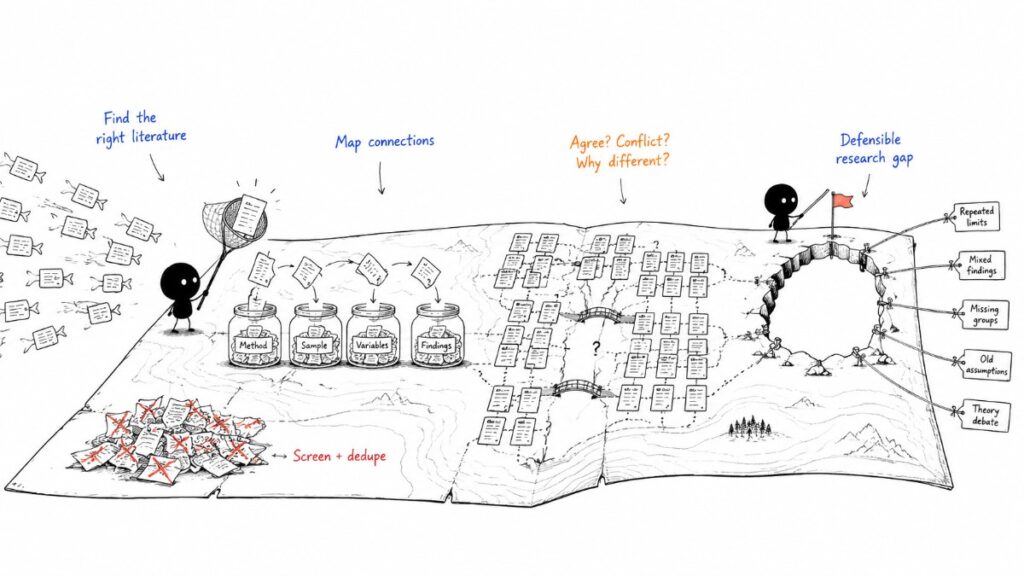
A strong literature review moves from a question to a map of the field, then from that map to a clear argument. In practice, the workflow usually has four stages.
Find and Map the Right Literature
At the beginning, you are not only searching for keywords. You are learning the vocabulary of the field, finding influential papers, following citations, and noticing which authors or research groups keep appearing. Discovery tools are useful here because they help you move beyond a flat search-results page and see how papers connect.
Screen and Extract Evidence
Once you have a long candidate list, the problem changes. You need to decide which papers are relevant, which are duplicates or tangential, and which deserve a full read. A good Literature Review AI workflow can help turn abstracts, methods, populations, variables, and findings into comparable information instead of scattered notes.
Compare Findings Across Studies
Reading one paper is rarely the hardest part. The harder task is understanding what happens when 20 or 40 papers are placed next to each other. Do the studies agree? Are the differences caused by sample size, methodology, measurement, or context? This is where AI becomes useful for synthesis, not just summarization.
Identify Defendable Research Gaps
A real research gap is not just “more research is needed.” It may come from repeated limitations, inconsistent findings, missing populations, outdated assumptions, or unresolved theoretical debates. A Deep Literature Review workflow should help surface these patterns while still leaving the final academic judgment to the researcher.
How to Choose the Right Literature Review AI Tool
The best tool depends on the bottleneck you are facing right now.
If you are still discovering the field, start with academic search and citation-mapping tools. If you already have hundreds of candidate papers, choose a tool that supports structured screening and extraction. If dense PDFs are slowing you down, use a paper-reading assistant. If your notes are complete but the argument still feels disconnected, look for tools that support cross-paper synthesis and research-gap discovery.
In short, do not look for one tool that claims to do everything. Choose the tool that matches the stage of your literature review workflow.
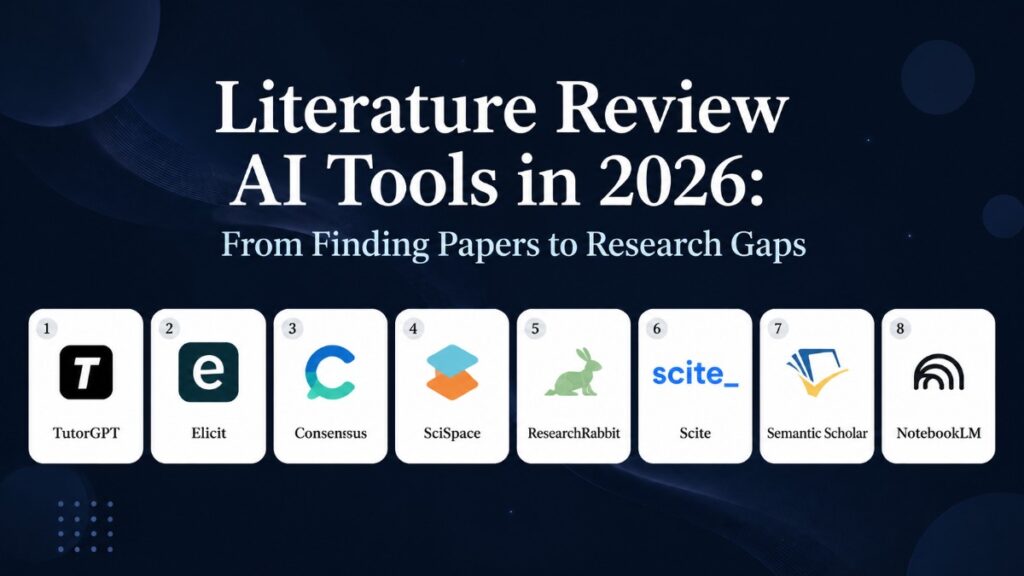
8 Best Literature Review AI Tools in 2026
The “best” Literature Review AI tool depends on where you are in the research workflow. Some tools are built to find papers, some help screen and extract evidence from large collections, while others are better for reading, citation checking, or synthesizing research.
The tools below are selected for different jobs, so the right choice depends on whether you are starting a literature search, screening a large paper set, making sense of difficult studies, or trying to identify a research gap.
1. TutorGPT — Best for Deep Literature Reviews
Core Feature: An AI Literature Review Agent that turns a research topic or question into a deeper research workflow.
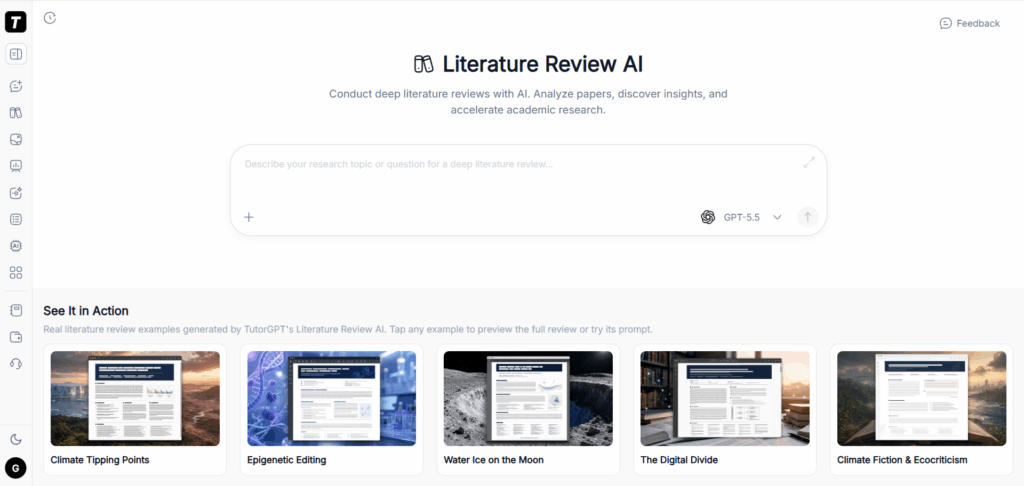
TutorGPT is designed for the point where simply finding and summarizing papers is no longer enough. Enter a research topic, and the Literature Review AI Agent can explore relevant literature, analyze papers, compare findings, identify recurring themes and limitations, and help surface potential research gaps.
The key difference is the level of synthesis. Instead of working on one PDF at a time, TutorGPT is designed to help you understand what the literature says as a whole.
Key Features:
- AI-powered Deep Literature Review
- Research question and topic-based exploration
- Cross-paper analysis and synthesis
- Identification of themes, limitations, and potential research gaps
- Citation-backed academic research
- AI Agent workflow rather than simple paper summarization
Best for: Researchers, graduate students, and anyone who already has a pile of papers but needs help turning them into a coherent research picture.
Pricing: Free access available; paid plans offer higher usage limits.
2. Elicit — Best for Structured and Systematic Literature Reviews
Core Feature: A structured research assistant for finding papers, screening studies, and extracting comparable data.
Elicit is particularly useful when your Literature Review looks more like a spreadsheet than a blank document. Its systematic-review workflow can help with search, title and abstract screening, full-text screening, and data extraction, while allowing researchers to define their own screening criteria and check the evidence behind AI-generated decisions.
One useful detail is the scale of its academic search. Elicit's current free tier offers unlimited search across 125M+ papers, while its paid plans expand systematic-review usage and extraction capacity. The Pro plan can screen up to 5,000 papers in its dedicated systematic-review workflow.
Key Features:
- Search across 125M+ academic papers
- Structured paper screening
- Customizable inclusion and exclusion criteria
- Data extraction into research tables
- Supporting quotes and source verification
- Systematic Literature Review workflow
- Research reports and review drafting
Best for: Systematic reviews, evidence synthesis, and researchers who need to screen and compare a large number of studies consistently.
Pricing: Free plan available. Plus starts at $11/month when billed annually; Pro starts at $39/month annually and includes the 5,000-paper systematic-review workflow.
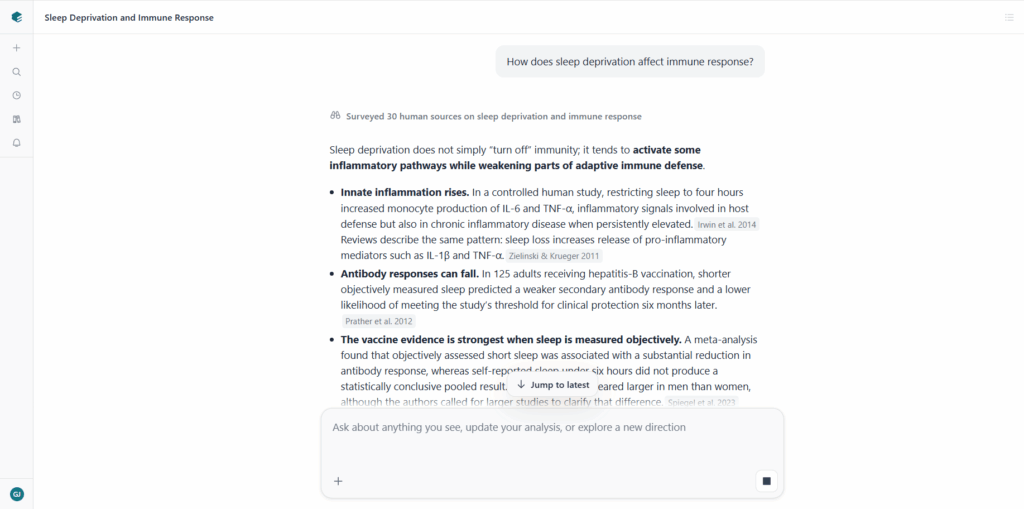
3. Consensus — Best for Evidence-Based Research Questions
Core Feature: An academic search engine that turns research questions into evidence-backed answers.
Consensus is useful when you have a question before you have a literature collection.
Instead of constructing several keyword searches yourself, you can ask something like “Does intermittent fasting improve metabolic health?” and use Consensus to find relevant peer-reviewed research, summarize the evidence, and inspect individual studies.
Its newer Deep Search workflow can conduct a more extensive literature review across up to 50 papers, while Study Snapshots surface details such as study design, sample size, population, and outcomes.
Key Features:
- AI-powered academic search
- Evidence synthesis from research papers
- Deep Search for more comprehensive reviews
- Study Snapshots for methodology and study details
- Pro messages that summarize multiple papers
- Research-backed outlines and rapid reviews
Best for: Researchers who have a specific question and want to quickly understand what the existing evidence says before going deeper.
Pricing: Free plan includes unlimited paper searches, 15 Pro messages, and 3 Deep reviews per month. Pro is $20/month or $144/year, with 15 Deep reviews per month; the Deep plan is $65/month or $540/year with up to 200 Deep reviews per month.
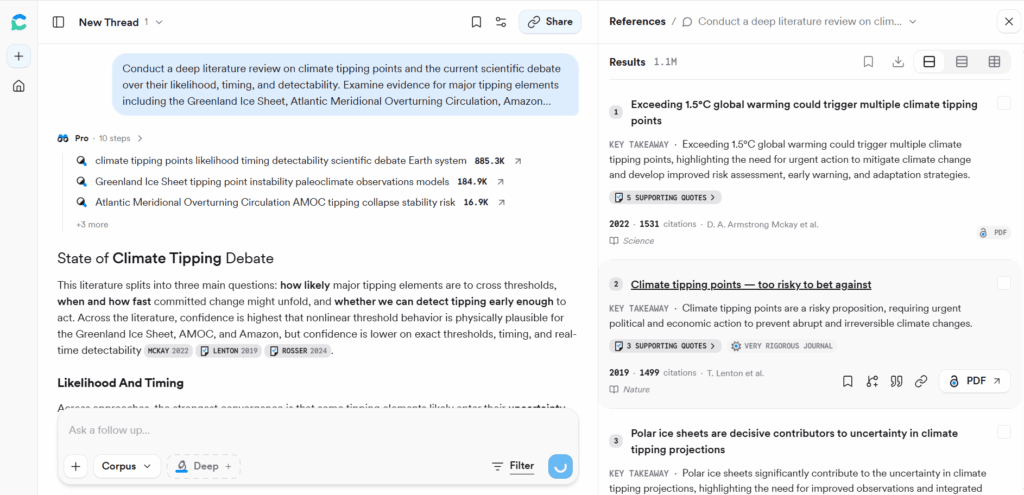
4. SciSpace — Best for Understanding Difficult Research Papers
Core Feature: An AI research workspace built around discovering, reading, analyzing, and writing scientific literature.
SciSpace becomes useful when you already have the paper but don't want to spend 45 minutes decoding one dense methodology section.
Its Chat with PDF experience lets you ask questions about a paper, while its Literature Review tools help search and filter research. The platform currently searches across 280M+ papers, and its standalone tools include Literature Reviews, Chat with PDF, citation generation, and academic writing features.
That makes SciSpace particularly useful for moving from paper discovery → paper understanding without constantly switching between a PDF reader, search engine, and AI chatbot.
Key Features:
- Chat with PDF
- Paper explanations and summaries
- Literature Review search and filtering
- Search across 280M+ papers
- Citation generation
- AI writing and paraphrasing
- SciSpace Agent for more complex research tasks
Best for: Researchers who spend a lot of time reading dense papers and want an AI assistant beside the PDF rather than a separate general-purpose chatbot.
Pricing: Free plan available. SciSpace Agent currently uses a credit system; the Basic plan includes 100 monthly credits, while Premium starts at $12/month when billed annually with 1,200 credits.
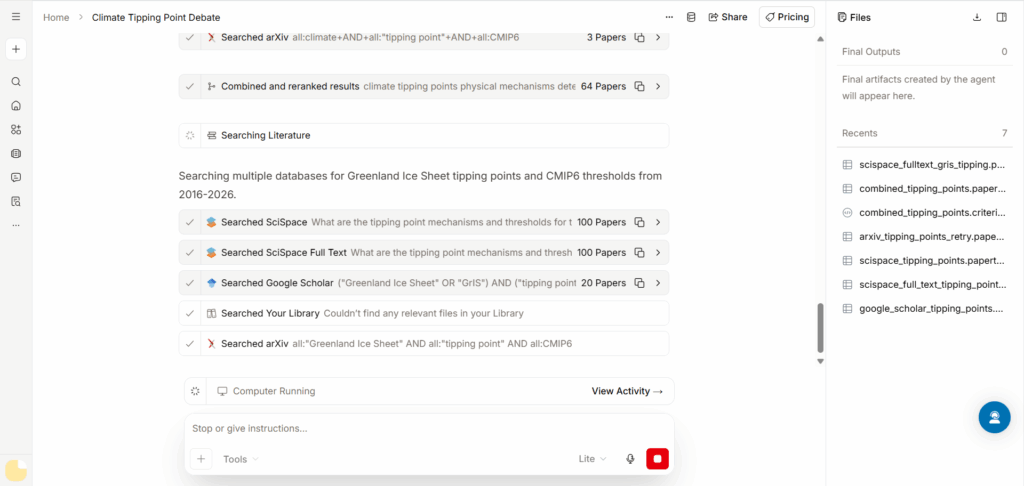
5. ResearchRabbit — Best for Visual Literature Discovery
Core Feature: A visual research discovery tool that maps connections between papers, authors, and citations.
ResearchRabbit is especially useful when you have found one or two papers that feel important and want to know what else is connected to them.
Instead of returning another long search-results page, it lets you explore citation relationships visually. You can move from a seed paper to related articles, earlier references, later citing papers, and authors working in the same area.
The free version currently supports unlimited searches across 310M+ articles, unlimited collections, and up to 50 seed articles. The paid RR+ plan increases that to 300 seed articles and adds advanced search controls.
Key Features:
- Visual citation maps
- Related-paper discovery
- Author and research-network exploration
- Forward and backward citation chasing
- Collections and subcollections
- Zotero import
- Collaboration and shared collections
Best for: Researchers who worry they are missing important papers, seminal work, or connected research groups.
Pricing: Free Forever plan available. ResearchRabbit+ is $10/month on the standard U.S./UK/Canada pricing tier, with country-based pricing available in many regions.
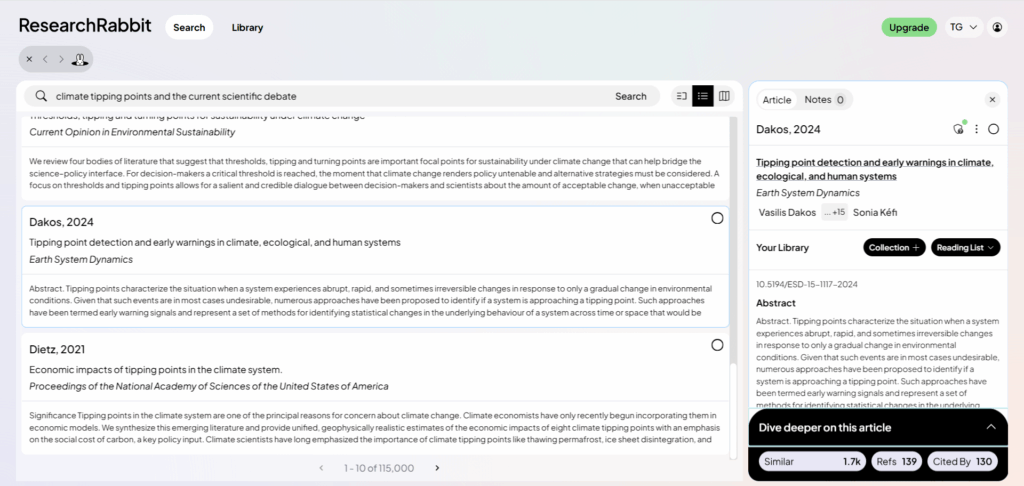
6. Scite — Best for Checking Whether Research Supports or Challenges a Claim
Core Feature: Smart Citations that show how later papers cite a particular study.
Scite solves a problem that citation counts cannot.
A paper may have 5,000 citations, but that number alone does not tell you whether later researchers agree with its conclusions. Scite analyzes citation contexts and shows whether studies support, contradict, or simply mention the cited work. Its database now contains more than 1.6 billion citation statements and covers research from 30+ publisher partners.
That becomes particularly useful when you are writing a critical Literature Review and encounter a claim that appears to be widely accepted.
Instead of citing the original paper and moving on, you can check what happened around that claim afterward.
Key Features:
- Smart Citations
- Supporting vs. contrasting citation context
- Citation statement analysis
- Reference Check
- Related-paper discovery
- Scite Assistant for research questions
Best for: Researchers who need to verify claims, evaluate the strength of cited evidence, and understand whether a finding has been supported or challenged by later research.
Pricing: Free trial available; paid access is subscription-based, with individual and institutional plans.
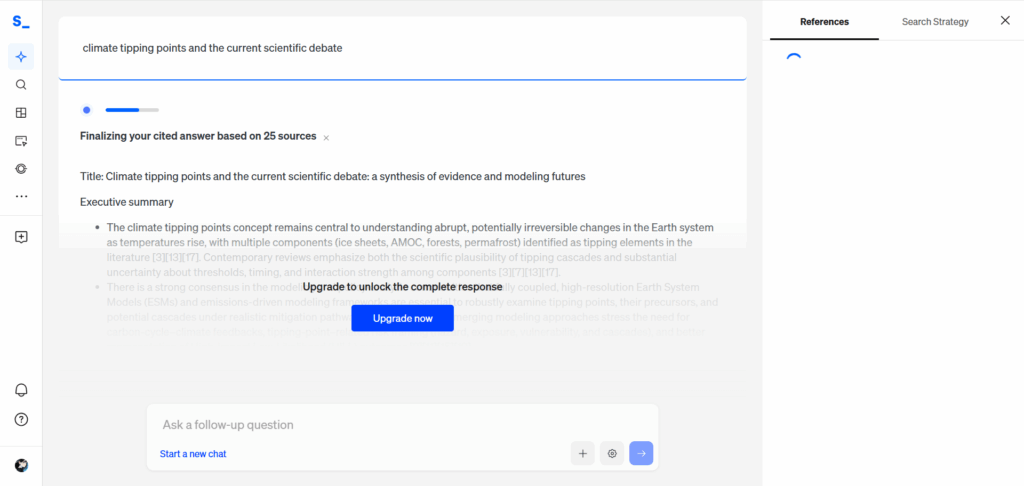
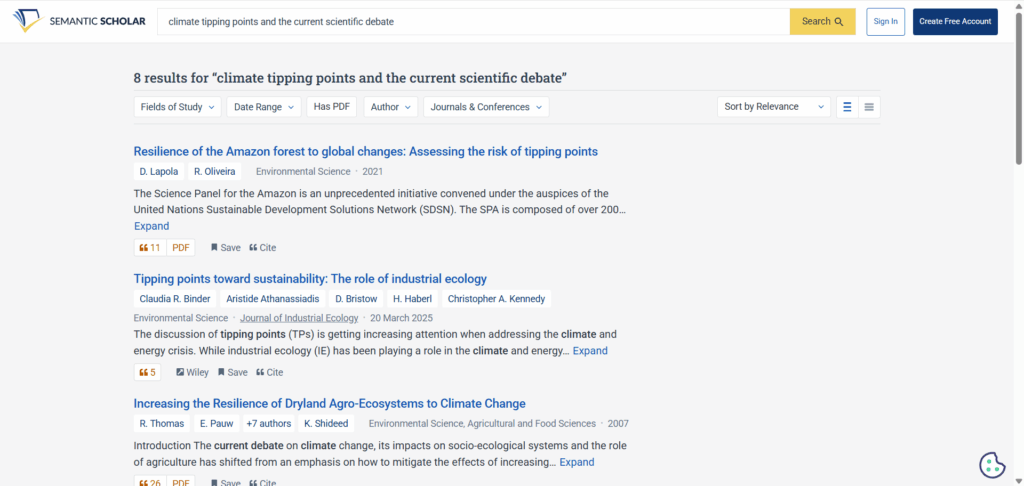
7. Semantic Scholar — Best Free Academic Search Starting Point
Core Feature: A free AI-powered academic search and discovery engine for finding relevant research.
Sometimes you do not need a full Literature Review Agent. You just need a reliable place to start.
Semantic Scholar is useful for broad academic discovery: search a topic, find relevant papers, follow citations, inspect authors, and build an initial reading list before moving into more specialized Literature Review tools.
It works particularly well at the first stage of the workflow, when you are still learning the vocabulary of a research area and trying to understand which papers are worth following.
Key Features:
- Free academic search
- AI-powered paper recommendations
- Citation and reference exploration
- Author profiles and research connections
- Paper summaries and key information
- Broad multidisciplinary coverage
Best for: Students and researchers who want a free academic search engine before moving into structured screening or deeper synthesis.
Pricing: Free.
8. NotebookLM — Best for Analyzing Your Own Research Collection
Core Feature: A source-grounded AI workspace that answers questions from the documents you provide.
NotebookLM is different from the tools above because it works best after you have already collected your literature.
Upload your papers, reports, notes, or other research material, then ask questions across the collection. Because the answers are grounded in your selected sources and include citations, you can use it to investigate themes, compare documents, clarify difficult sections, or prepare a research briefing.
For example, after collecting 40 papers on climate adaptation, you might ask:
Which studies use longitudinal data?
Then:
Which limitations appear repeatedly across these studies?
And finally:
Where do the studies disagree?
The free tier currently supports up to 100 notebooks with 50 sources per notebook, while higher tiers increase the number of sources per notebook and expand usage limits.
Key Features:
- Source-grounded Q&A
- PDF, document, web, and other source support
- Cross-document analysis
- Inline citations to source material
- Audio and Video Overviews
- Deep Research
- Mind Maps and source-based reports
Best for: Researchers who already have a curated collection of papers and want to interrogate those sources without repeatedly opening every document.
Pricing: Free plan available. Google AI Pro provides higher notebook, source, and usage limits.
Which Literature Review AI Tool Should You Use?
The easiest way to choose is to start with the part of your research that is currently slowing you down.
If you are still discovering the field, Semantic Scholar and ResearchRabbit are strong starting points. If you have a large collection that needs structured screening and extraction, Elicit is better suited to the job. When the problem is understanding a difficult PDF, SciSpace can save considerable reading time. Consensus is useful when you want an evidence-backed answer to a specific research question, while Scite is particularly valuable when you need to investigate whether existing research actually supports a claim.
If you already have your papers and want to interrogate your own source collection, NotebookLM is a natural fit.
And if the problem has changed from “Which papers should I read?” to “What does all this research mean together, and where is the field still missing something?”, that is where TutorGPT's Deep Literature Review workflow becomes particularly relevant.
The important distinction is not which tool has the most features. It is which part of the Literature Review workflow you need help with right now.
AI Literature Review Tools Compared
| Tool | Best for | Strongest stage |
| TutorGPT | Deep literature review | Synthesis & research gaps |
| Elicit | Structured reviews | Screening & extraction |
| Consensus | Evidence-based questions | Evidence discovery |
| SciSpace | Understanding papers | Reading |
| ResearchRabbit | Literature discovery | Discovery |
| Scite | Citation context | Citation checking |
| Semantic Scholar | Academic search | Discovery |
| NotebookLM | Your own sources | Source-based analysis |
The important thing is not which row has the most checkmarks.
It is whether the tool matches the part of your workflow currently consuming your attention.
Can AI Really Do a Literature Review?
This is where some caution is deserved.
AI can be remarkably useful for discovery, screening, organizing information, comparing studies, and generating new ways to look at a research question. But that does not mean you should hand it a topic and blindly paste the result into a thesis.
Researchers themselves remain skeptical of fully automated literature reviews. Recent discussions include concerns about shallow synthesis, hallucinated or misrepresented sources, and the possibility that AI-generated reviews encourage researchers to skip the slower work of evaluating evidence.
That does not make AI useless.
Quite the opposite.
It means the most useful workflow is usually AI-assisted rather than AI-replaced.
Let AI help you find relationships you may have missed. Let it surface studies worth reading. Let it compare evidence across a large set of papers. Then go back to the original sources, inspect the methods, challenge the interpretation, and decide what belongs in your argument.
A polished paragraph is not evidence.
A citation is not automatically a good source.
And a possible research gap is not automatically a real research gap.
Those judgments still belong to you.
Final Takeaway: Choose the Tool That Matches Your Research Workflow
The best Literature Review AI isn’t the one with the most features. It’s the one that helps you move forward when your research gets stuck.
Need to find papers? Discover. Too many studies? Screen. Conflicting findings? Compare. Looking for a gap? Go deeper.
TutorGPT brings these steps into a deeper literature review workflow, helping you move from scattered papers to a clearer view of the field—and the questions that still need answers.
Don’t just read more. Understand more.