
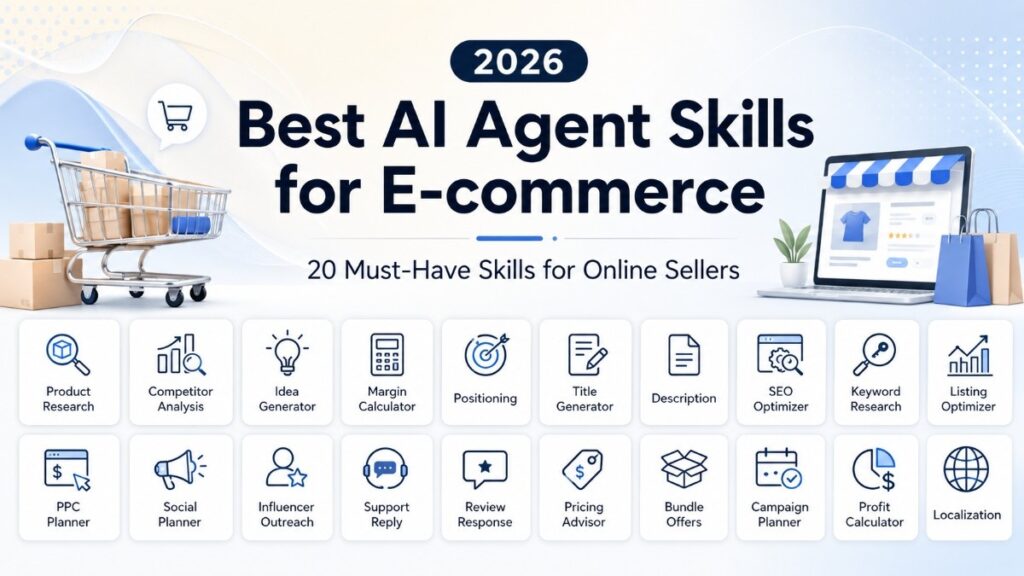
Running an e-commerce business in 2026 means dealing with dozens of tasks every day: finding profitable products, writing listings, analyzing competitors, managing ads, answering customers, tracking inventory, and creating marketing content.
The problem is that most sellers already have too many tools, but still spend hours on repetitive work. A product researcher helps find opportunities, a copywriting tool helps write descriptions, and an analytics dashboard shows data — but sellers still need to connect these tasks together.
This is where AI agent skills can make a difference.
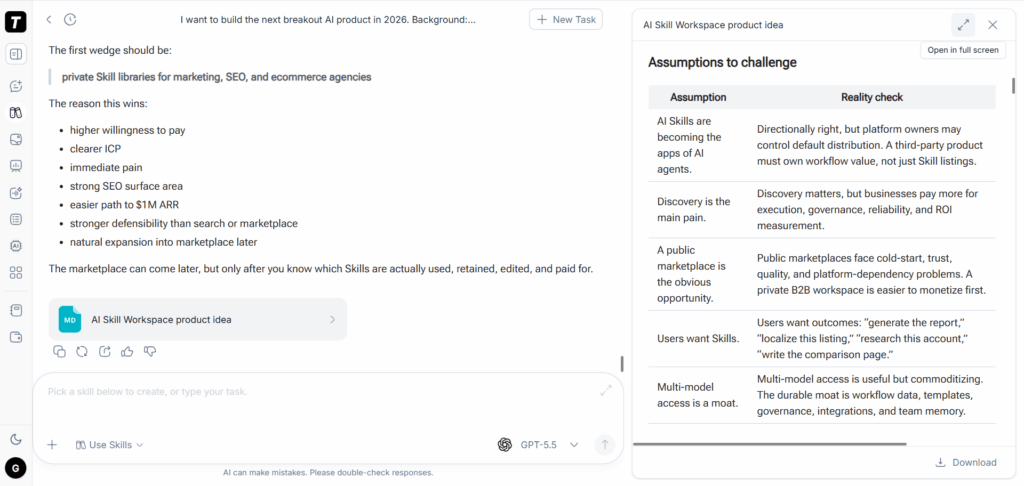
Unlike simple AI prompts, AI agent skills are designed for specific e-commerce workflows. They help sellers complete repeatable tasks, such as analyzing market trends, optimizing product pages, generating ad strategies, forecasting inventory needs, and creating localized content for different markets.
In this guide, we’ll explore 20 AI agent skills that online sellers can use in 2026 to automate daily operations, improve conversion rates, and build a more efficient e-commerce workflow.
Quick Overview: 20 E-commerce AI Agent Skills
| # | Skill | Best For | Primary Outcome |
| 1 | Product Research | New product validation | Market opportunity report |
| 2 | Competitor Analysis | Market positioning | Competitor gap analysis |
| 3 | Product Idea Generator | Early-stage ideation | Validated product concept |
| 4 | Profit Margin Calculator | Amazon profitability | Cost and margin breakdown |
| 5 | Product Positioning | Differentiation | Value proposition |
| 6 | Product Title Generator | Search visibility | Optimized product title |
| 7 | Product Description Generator | Listing copy | Complete product listing |
| 8 | E-commerce SEO Optimizer | Organic ranking | SEO-ready product page |
| 9 | Keyword Research | Search demand | High-intent keyword list |
| 10 | Amazon Listing Optimizer | Amazon search | Marketplace-ready listing |
| 11 | PPC Campaign Planner | Paid acquisition | Campaign structure and bids |
| 12 | Social Media Planner | Content operations | Content calendar |
| 13 | Influencer Outreach Email | Creator partnerships | Outreach and campaign plan |
| 14 | Customer Support Reply Generator | Buyer communication | On-brand replies |
| 15 | Product Review Response Assistant | Review management | Trust-building responses |
| 16 | Pricing Strategy Advisor | Monetization | Pricing and packaging plan |
| 17 | Bundle Offer Generator | AOV growth | Profitable bundle offers |
| 18 | Promotion Campaign Planner | Seasonal campaigns | Executable campaign brief |
| 19 | Profit Calculator | Shopify and DTC margins | Unit economics analysis |
| 20 | Localization Assistant | Cross-border selling | Localized product listings |
How to Use This List
If you are just starting, begin with product research, profit calculation, keyword research, and listing optimization. If you already have traction, prioritize PPC planning, SEO optimization, pricing strategy, bundles, campaigns, and review management. If you sell across borders, localization becomes one of the highest-leverage skills.
The real value comes from combining these skills into a workflow rather than treating them as one-off tools.
1. Product Research
Source: Product Research
What This Skill Does
Product Research helps sellers validate product opportunities before committing money to sourcing, manufacturing, or inventory. It analyzes market demand, competition intensity, profit potential, customer behavior signals, and category entry barriers.
A strong product research workflow looks at search demand, review volume, price bands, category saturation, brand dominance, patent risks, compliance issues, seasonality, and sourcing feasibility. For Amazon sellers, it can also estimate FBA fees, shipping costs, landed cost, break-even price, and realistic margin ranges.
Why It Matters for Sellers
Many e-commerce failures begin before launch. Sellers choose products based on personal preference, viral trends, or surface-level revenue screenshots, then discover that competition is too strong, margins are too thin, or customer acquisition is too expensive.
Product Research improves decision quality. It helps sellers compare multiple ideas before buying inventory, avoid categories controlled by entrenched brands, and identify product angles where customer dissatisfaction is visible in reviews.
Best Use Case
Use this skill before sourcing a product, entering a new category, or expanding your SKU portfolio. It is especially useful for Amazon FBA, private label, wholesale, and DTC teams that need to validate demand before investing capital.
2. Competitor Analysis
Source: Competitor Analysis
What This Skill Does
Competitor Analysis benchmarks direct competitors across listings, pricing, reviews, ratings, images, A+ content, advertising tactics, keyword coverage, and market positioning.
It helps sellers answer practical questions: What do top competitors emphasize? Which benefits are repeated across the category? Where are customers dissatisfied? Which keywords are competitors ranking for? What price points dominate the market? Which visual assets look weak or outdated?
Why It Matters for Sellers
The goal is not to copy competitors. The goal is to find defendable differentiation.
If competitors win on price, a seller may need to win on bundle value, better education, premium materials, stronger guarantees, or a more specific customer segment. If competitors have thousands of reviews, a new seller needs a sharper entry angle. If competitors have weak images, creative quality can become a conversion advantage.
Best Use Case
Use this skill when entering a crowded category, refreshing an existing listing, preparing a launch strategy, or deciding how to reposition a product that is not converting well.
3. Product Idea Generator
Source: Product Idea Generator
What This Skill Does
Product Idea Generator helps founders, operators, and creators mine their existing experience, customer conversations, business operations, or niche expertise to surface product ideas worth validating.
Instead of producing random ideas, it follows a structured discovery process. It identifies the founder’s knowledge base, extracts repeated pain points, synthesizes patterns, scores ideas by feasibility and market fit, and turns the strongest candidate into a clear product concept.
Why It Matters for Sellers
The best e-commerce ideas often come from operational friction or domain-specific knowledge. A fitness coach may notice recurring equipment problems. A parent may identify gaps in children’s storage products. A pet owner may see unmet needs in grooming routines. A kitchen creator may discover that existing tools fail for a specific cooking style.
This skill turns raw observations into product hypotheses that can later be validated with product research and competitor analysis.
Best Use Case
Use it when you want to create a new product line, build around founder expertise, launch a niche brand, or explore ideas beyond obvious marketplace trends.
4. Profit Margin Calculator
Source: Profit Margin Calculator
What This Skill Does
Profit Margin Calculator breaks down Amazon product profitability by calculating product cost, shipping, FBA fees, referral fees, storage fees, returns, discounts, and other expenses.
It helps sellers calculate net profit, profit margin, break-even price, target price, and minimum viable margin. It can also support single-product analysis or batch calculations across multiple SKUs.
Why It Matters for Sellers
Many sellers mistake revenue for profit. A product can look attractive at the sales level but fail once platform fees, shipping, PPC, returns, promotions, and storage costs are included.
This skill gives sellers margin visibility before and after launch. Before sourcing, it tests whether the product can support advertising and discounts. After launch, it diagnoses margin erosion and supports pricing adjustments.
Best Use Case
Use this skill before placing inventory orders, after shipping cost changes, before running promotions, or whenever ACoS rises and profitability becomes unclear.
5. Product Positioning
Source: Product Positioning
What This Skill Does
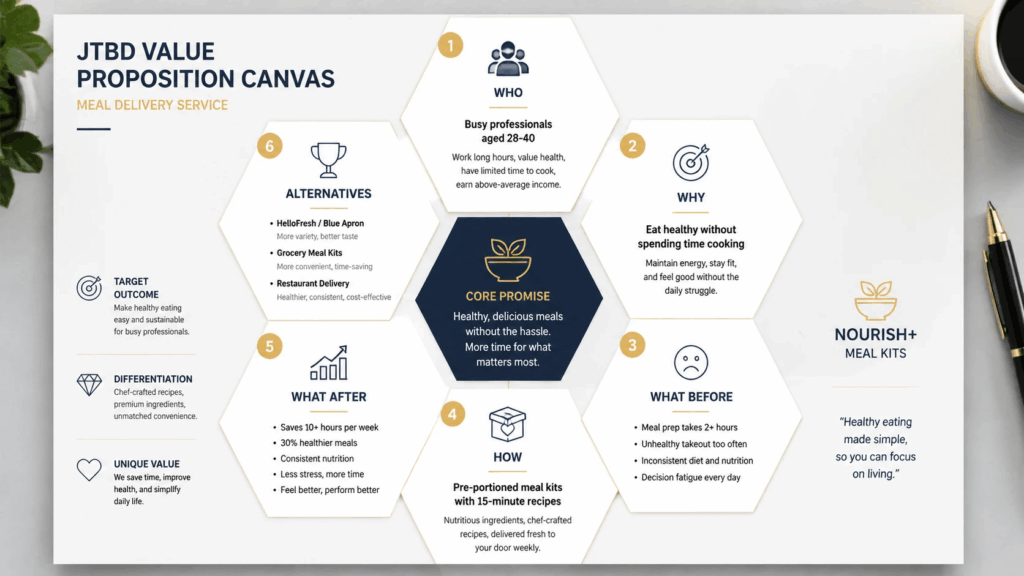
Product Positioning defines why a customer should choose your product over alternatives. It uses a Jobs-to-Be-Done style framework to clarify who the customer is, what problem they are solving, what they currently do instead, how the product improves the outcome, and why it is different.
Why It Matters for Sellers
Positioning affects product titles, bullets, images, comparison charts, ads, landing pages, influencer briefs, and packaging. A poorly positioned product becomes a list of features. A well-positioned product becomes a clear solution for a specific buyer.
For example, a travel backpack can be positioned for digital nomads, weekend hikers, business commuters, or students. Each audience needs different proof points, imagery, language, and bundle offers.
Best Use Case
Use Product Positioning before writing listings, designing images, planning ads, or launching influencer campaigns. It gives every downstream marketing asset a strategic foundation.
6. Product Title Generator
Source: Product Title Generator
What This Skill Does
Product Title Generator optimizes product titles for search visibility and click-through rate across Amazon, Etsy, Walmart, Shopify, and eBay.
A good title balances keyword coverage with readability. It may include product type, core keyword, material, size, use case, compatibility, color, pack count, audience, and differentiator — without becoming unreadable keyword stuffing.
Why It Matters for Sellers
Titles sit at the intersection of search and conversion. On Amazon, they influence indexing and relevance. On Shopify, they affect SEO snippets and collection pages. On Etsy, they must preserve discoverability while staying concise. On Walmart and eBay, titles must match platform conventions.
Small title improvements can increase qualified impressions and improve click-through rate.
Best Use Case
Use this skill when launching a new product, optimizing an underperforming listing, adapting listings across platforms, or testing different title angles.
7. Product Description Generator
Source: Product Description Generator
What This Skill Does
Product Description Generator creates and improves e-commerce listing content, including titles, bullet points, descriptions, backend keywords, and benefit-led copy.
It can work in create mode or optimize mode. In create mode, it turns product specs into a complete listing. In optimize mode, it identifies weak sections, missing keywords, unclear benefits, and gaps compared with top competitors.
Why It Matters for Sellers
Manual listing writing is slow, inconsistent, and often too feature-heavy. A structured description workflow ensures each listing explains what the product is, why it matters, how it helps the buyer, and what evidence supports the claim.
For teams managing many SKUs, this skill improves consistency and reduces listing production time.
Best Use Case
Use it to create Amazon bullets, Shopify descriptions, Etsy product copy, Walmart listings, TikTok Shop content, and backend keyword fields.
8. E-commerce SEO Optimizer
Source: E-commerce SEO Optimizer
What This Skill Does
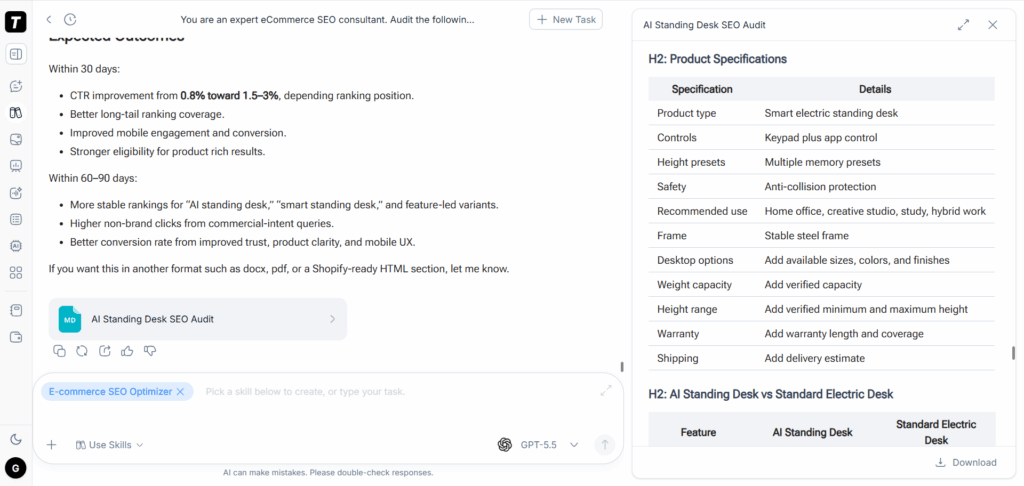
E-commerce SEO Optimizer improves product page visibility across Google, Bing, and platform-specific search. It covers on-page SEO, structured data, page speed, mobile layout, content hierarchy, internal linking, FAQs, image alt text, and search intent alignment.
Why It Matters for Sellers
Paid traffic is expensive, and marketplace dependency is risky. Shopify and DTC brands need product pages that can rank for commercial queries, comparison searches, and long-tail buyer intent.
An optimized product page should not only convert visitors from ads. It should also become a search asset that brings qualified organic traffic over time.
Best Use Case
Use this skill for Shopify product pages, collection pages, buying guides, SEO landing pages, and high-priority product pages that deserve organic visibility.
9. Keyword Research
Source: Keyword Research
What This Skill Does
Keyword Research discovers high-converting search terms across Amazon, Shopify, Etsy, Google Shopping, TikTok Shop, and Walmart. It evaluates search volume, competition, commercial intent, and long-tail opportunities.
Why It Matters for Sellers
Not all traffic is valuable. Sellers need keywords that indicate purchase readiness, not just broad interest. A search like “best leakproof lunch box for kids” is usually more actionable than “lunch box ideas.”
This skill helps sellers prioritize terms for titles, bullets, backend keywords, PPC campaigns, SEO pages, product descriptions, and content calendars.
Best Use Case
Use it before writing listings, building ad campaigns, launching SEO pages, or expanding into new marketplaces.
10. Amazon Listing Optimizer
Source: Amazon Listing Optimizer
What This Skill Does
Amazon Listing Optimizer focuses on Amazon-specific search and conversion performance. It helps sellers structure listing content around keyword placement, title clarity, bullet quality, backend terms, image messaging, and competitor gaps.
Why It Matters for Sellers
Keyword research finds demand. Listing optimization turns that demand into a compliant, readable, conversion-oriented Amazon listing.
This skill can align organic search and PPC strategy by ensuring target keywords appear naturally in the listing and that the listing communicates benefits clearly enough to convert paid traffic.
Best Use Case
Use it when launching a new ASIN, improving an underperforming listing, refreshing old content, or adjusting copy based on review insights.
11. PPC Campaign Planner
Source: PPC Campaign Planner
What This Skill Does
PPC Campaign Planner builds and optimizes Amazon advertising campaigns. It can create campaign structures, keyword groupings, bid calculations, negative keyword lists, and week-by-week optimization action plans.
Why It Matters for Sellers
PPC is often where profitability is won or lost. Poor campaign structure leads to wasted spend, unclear data, and keyword cannibalization.
A structured PPC workflow separates auto, broad, phrase, exact, product targeting, Sponsored Brands, and Sponsored Display campaigns with clear goals. It also calculates break-even ACoS and target ACoS so bids are tied to margin reality.
Best Use Case
Use this skill before launching Amazon ads, when auditing search term reports, when scaling profitable keywords, or when reducing wasted spend.
12. Social Media Planner
Source: Social Media Planner
What This Skill Does
Social Media Planner builds content calendars across monthly or quarterly cycles. It assigns content to platforms, organizes posts around content pillars, and designs repurposing workflows.
Why It Matters for Sellers
For e-commerce brands, social content is not just brand awareness. It supports product education, launch momentum, customer proof, seasonal promotions, influencer amplification, and retargeting assets.
A single product demonstration can become a TikTok video, Instagram Reel, Pinterest pin, email section, product page asset, ad creative, and marketplace video.
Best Use Case
Use it when planning product launch content, seasonal campaigns, creator-driven assets, or always-on social publishing.
13. Influencer Outreach Email
Source: Influencer Outreach Email
What This Skill Does
Influencer Outreach Email supports creator partnerships, KOL campaigns, brand ambassador programs, sponsored content, and collaboration workflows. It helps sellers plan outreach, structure offers, write personalized emails, and manage follow-up.
Why It Matters for Sellers
Influencer marketing works best when the creator-product fit is clear. Generic outreach gets ignored. A strong outreach workflow defines the campaign angle, explains why the product fits the creator’s audience, and proposes a clear next step.
In 2026, creator partnerships are not only about reach. They are a source of product education, social proof, UGC, and reusable ad creative.
Best Use Case
Use this skill when launching new products, entering TikTok Shop or Instagram commerce, recruiting micro-influencers, or building ambassador programs.
14. Customer Support Reply Generator
Source: Customer Support Reply Generator
What This Skill Does
Customer Support Reply Generator writes on-brand responses to customer questions, complaints, and feedback. It can thank satisfied buyers, de-escalate negative experiences, address mixed feedback, and produce reusable templates for common scenarios.
Why It Matters for Sellers
Support messages are part of the public buying experience. On marketplaces and DTC stores, future shoppers often read brand replies before making a decision.
A thoughtful response can reduce distrust, clarify product use, explain resolution steps, and show accountability. The best outputs are specific rather than generic.
Best Use Case
Use it for marketplace messages, Shopify support replies, FAQ responses, complaint handling, and post-purchase communication.
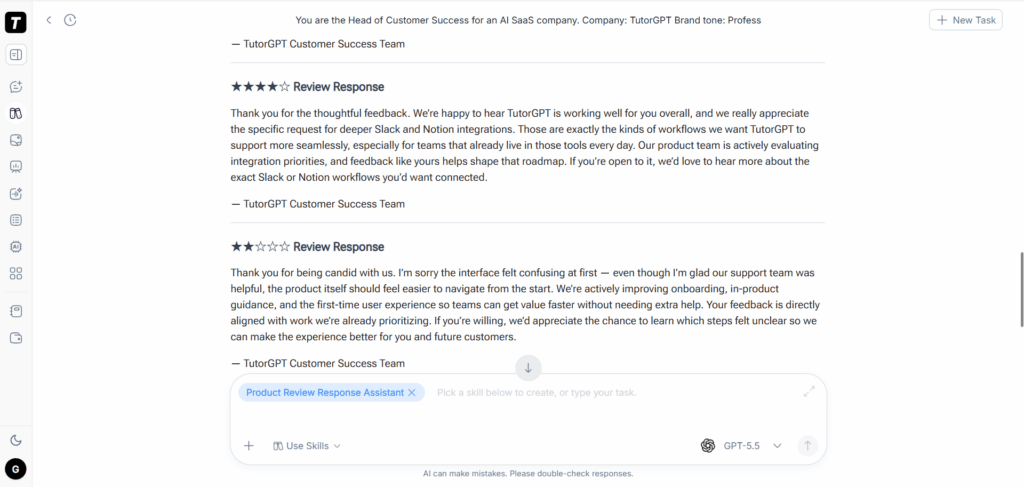
15. Product Review Response Assistant
Source: Product Review Response Assistant
What This Skill Does
Product Review Response Assistant focuses specifically on review management. It analyzes sentiment, identifies the concern, chooses the response strategy, drafts a tailored reply, and extracts reusable patterns for future responses.
Why It Matters for Sellers
Reviews are public trust signals. A response to a one-star review is not only for the original customer; it is also for every future shopper evaluating how the brand handles problems.
This skill helps teams respond quickly to recurring issues such as sizing confusion, shipping delays, missing accessories, packaging damage, product defects, or unclear instructions.
Best Use Case
Use it for Amazon reviews, Shopify reviews, Etsy feedback, post-purchase surveys, and reputation management workflows.
16. Pricing Strategy Advisor
Source: Pricing Strategy Advisor
What This Skill Does
Pricing Strategy Advisor supports pricing, packaging, discounting, tier design, monetization, and willingness-to-pay analysis. It can benchmark market pricing, design price tiers, plan price increases, and recommend packaging structures.
Why It Matters for Sellers
Pricing is not just a number. It is a positioning signal, a conversion lever, and a margin control point.
Sellers need to know when to compete on price, when to defend premium positioning, when to create a bundle, and when to introduce an entry-level or premium SKU.
Best Use Case
Use this skill before changing prices, launching bundles, creating subscriptions, preparing promotions, or entering a category with strong price competition.
17. Bundle Offer Generator
Source: Bundle Offer Generator
What This Skill Does
Bundle Offer Generator creates profitable product bundles by scoring product compatibility, calculating discount rates, checking margins, and producing platform-ready listing content.
Why It Matters for Sellers
Bundles can increase average order value, move slow inventory, improve customer convenience, and differentiate against single-item competitors. However, bundles can also destroy margin if discounts, fulfillment costs, and platform fees are not modeled correctly.
This skill helps sellers rank bundle candidates, select discount levels, prepare listings, and design A/B tests.
Best Use Case
Use it for starter kits, seasonal bundles, complementary SKU packs, replenishment offers, gift sets, and clearance campaigns.
18. Promotion Campaign Planner
Source: Promotion Campaign Planner
What This Skill Does
Promotion Campaign Planner turns a marketing goal into an executable campaign brief. It defines objectives, audience segments, core messages, proof points, channels, content calendar, milestones, owners, and KPIs.
Why It Matters for Sellers
Campaigns often fail because activity is scattered. Sellers run discounts, posts, emails, influencer content, and ads without a unified plan.
A strong campaign plan coordinates email, paid ads, social content, influencer posts, marketplace promotions, landing pages, and retargeting around one goal.
Best Use Case
Use it for product launches, Prime Day, Black Friday, Cyber Monday, back-to-school, Valentine’s Day, Mother’s Day, holiday gifting, and clearance events.
19. Profit Calculator
What This Skill Does
Profit Calculator is designed for Shopify and DTC sellers. It calculates margins with cost breakdowns that include ad spend, CAC, payment processing fees, 3PL fulfillment, shipping subsidies, returns, discounts, subscription apps, and fixed costs.
Why It Matters for Sellers
DTC profitability depends on different economics from Amazon. A Shopify brand may have higher control over customer data and branding, but it also carries acquisition costs, fulfillment complexity, creative production, and retention expenses.
This skill helps sellers understand contribution margin, LTV/CAC ratio, payback period, and net profit after variable and fixed costs.
Best Use Case
Use it when evaluating Shopify performance, scaling ads, testing discounts, negotiating 3PL costs, or deciding whether growth is actually profitable.
20. Localization Assistant
Source: Localization Assistant
What This Skill Does
Localization Assistant adapts product listings across international markets. It translates, culturally adapts, and optimizes titles, bullets, descriptions, measurements, currencies, and backend search terms for local search behavior.
Why It Matters for Sellers
Real localization is more than translation. A product that performs well in the US may need different keywords, sizing explanations, formality, compliance language, images, or benefit emphasis in Japan, Germany, France, Mexico, or Southeast Asia.
Marketplaces reward listings that match local buyer behavior. This skill helps sellers make each listing feel native rather than translated.
Best Use Case
Use it when expanding to new Amazon marketplaces, launching multilingual Shopify stores, adapting listings for regional platforms, or testing cross-border demand.
How to Build an E-commerce AI Workflow with TutorGPT AI Skills
Step 1: Validate Before You Build
Start with Product Idea Generator, Product Research, Competitor Analysis, and Profit Margin Calculator. This prevents sellers from spending money on products that look interesting but fail on demand, differentiation, or margin.
Step 2: Turn Strategy Into Listings
Next, use Product Positioning, Keyword Research, Product Title Generator, Product Description Generator, Amazon Listing Optimizer, and E-commerce SEO Optimizer. This turns a validated idea into a searchable, persuasive, platform-ready product page.
Step 3: Drive Traffic and Demand
Use PPC Campaign Planner, Social Media Planner, Influencer Outreach Email, and Promotion Campaign Planner to coordinate paid traffic, organic content, creators, and seasonal campaigns.
Step 4: Protect Trust and Profitability
Use Customer Support Reply Generator, Product Review Response Assistant, Pricing Strategy Advisor, Bundle Offer Generator, and Profit Calculator to improve customer trust, average order value, and unit economics.
Step 5: Expand Into New Markets
Use Localization Assistant when moving into new countries or marketplaces. Localization should happen after the core product, positioning, and economics are clear.
Try TutorGPT AI Skills
If you want to build this workflow instead of managing disconnected prompts, start with TutorGPTAI Skills. The library is designed around practical, task-specific skills that help online sellers research, write, optimize, plan, respond, calculate, and localize faster.
For e-commerce teams, this means AI can support the full operating cycle — not just content generation.
Final Verdict
Best Skills for Beginners
For beginners, the most important starting skills are Product Research, Profit Margin Calculator, Keyword Research, Product Title Generator, and Product Description Generator. These cover the basics of finding a viable product and creating a searchable listing.
Best Skills for Growth-Stage Sellers
For growth-stage sellers, the priority shifts toward Competitor Analysis, PPC Campaign Planner, E-commerce SEO Optimizer, Pricing Strategy Advisor, Bundle Offer Generator, and Promotion Campaign Planner. These skills help improve traffic, conversion, pricing, and average order value.
Best Skills for Cross-Border Brands
For cross-border and multi-channel brands, Localization Assistant, Social Media Planner, Influencer Outreach Email, Product Review Response Assistant, and Profit Calculator become essential. They help teams operate across markets while maintaining trust and profitability.